HEALTHWATCH FOCUS: How the LGBTQ+ community experiences health and social care in North Yorkshire
More than 200 members of the LGBTQ+ community and their allies across North Yorkshire have been sharing their views and experiences with us to help make a difference to health and social care services, with a focus on mental health support. Our full report will be released in the coming weeks, but to mark LGBT+ History Month we met North Yorkshire equality trainer Jake Furby to discuss the challenges members of the community can face when accessing care – and how things could be improved.
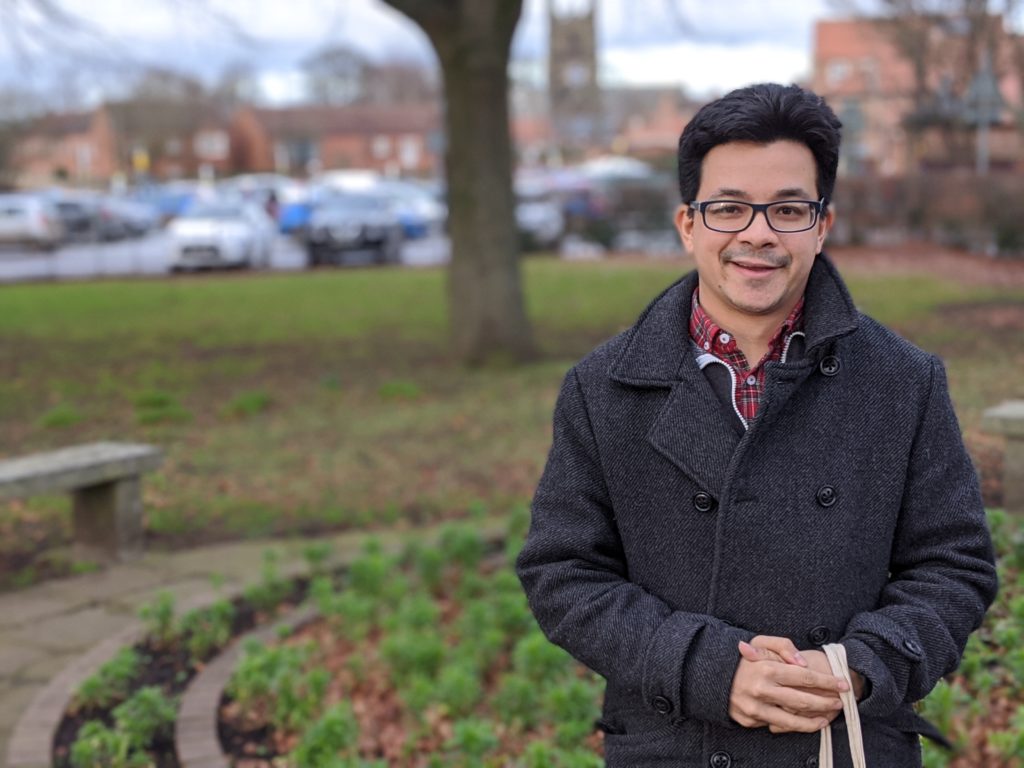
“Some services really, really struggle to engage with asking, or they’re a bit scared to ask. They don’t know what to say or how to deal with it.”
Jake Furby sums up one of the key issues he says members of the LGBTQ+ community face when accessing health and social care services in North Yorkshire: communication.
Or rather the lack of it.
Jake, who runs a business offering equality and diversity training in North Yorkshire, says it is vital for professionals to be aware of people’s sexual orientation and gender identity to ensure they are getting the best possible care – but confusion and embarrassment often make it easier to avoid the issue.
However, he insists there’s good news for everyone – it’s just a question of being willing to talk and learn, and health and care professionals should never be afraid to broach the subject for fear of making mistakes. “It’s better to get it wrong and learn from it than to not go there at all,” Jake says. “At least if you’ve gone there, you’ve tried. Even if you get it wrong, it shows that you’re willing to engage, which can be quite powerful.”
Trying to understand the nuances of sexual orientation and gender identity can be daunting for anyone who is not part of the broad community often summarised as LGBTQ+. It stands for lesbian, gay, bisexual, transgender and queer or questioning, with the “plus” encompassing others grouped by a common theme – they don’t identify as straight or cisgender (someone whose gender identity matches the sex they were assigned at birth).
It is sometimes suggested that sexual orientation and gender identity should be irrelevant in a healthcare setting, but research has shown outcomes can be worse for those who find themselves defined in this way. Last November, a House of Commons committee said LGBT people were being let down in health and social care and by a lack of leadership in Government, NHS and social services. The Women and Equalities Committee said that too often LGBT people are expected to fit into systems that assume they are straight and cisgender, but “deep inequalities” exist in health outcomes for these communities and that treating them “the same” as non-LGBT people will not address these poor outcomes.
Training
The committee recommended that sexual orientation and gender identity monitoring should be made mandatory by the NHS and social care sector within 12 months, and said the NHS Long Term Plan is “too generic” to work effectively for LGBT people, who should be considered explicitly as part of health commissioning.
Witnesses to the committee commented repeatedly on the importance of training front-line staff, which Jake sees as critical to tackling these inequalities.
“When I give my training I always say sexual orientation and gender identity is a spectrum,” he explains. “There’s no 100 per cent this, that or the other. Seeing it as a spectrum really helps. Within that spectrum, it can be helpful to train staff in the main orientations, identities and pronouns in particular. I do understand how that can be quite confusing, all these different terminologies.”
When I give my training I always say sexual orientation and gender identity is a spectrum…. there’s no 100 per cent this, that or the other
jake furby
Pronouns (words used as an alternative to someone’s name – such as ‘he’, ‘she’ or ‘they’) can be confusing in a world in which people have been historically defined as male or female. Jake, who lives in Northallerton, identifies as non-binary, which means he doesn’t see himself as male or female. In common with many non-binary people he uses the pronouns ‘they’ and ‘their’ – but he also uses ‘he’ and ‘his’ because – to invoke the spectrum – he is on the “masculine side” of non-binary.
“I also identify as gay,” he says, “because trying to explain that I’m androsexual blows people’s minds! People get ‘gay’ and it’s very similar. If you’re cis-male and you’re attracted to other cis-males, you’re gay. If you’re androsexual, you’re attracted to masculine people – particularly men.”
Labels
Some might argue that in a utopian society we would not need all these “labels”, and that they can serve to cement divisions between communities. “In terms of identity, the terms can be useful because they give you a community, and human beings gravitate to others like themselves, so in some ways we need to have those labels,” Jake says. “In other ways we’re getting to the point where we’re on the cusp of labels starting to become obsolete.
“It used to be very black and white – you were gay or you were straight. You didn’t have anything else inbetween. ‘Gay’ was used for such a long time to cover everything, even trans. There are people in our community who feel isolated. Bi people get discrimination from both sides. That’s quite tough.”
Isolation, he says, is a key issue for members of the LGBTQ+ community living in North Yorkshire, England’s largest county, with just over 600,000 people scattered across a huge area. Only eight of our towns have a population of more than 10,000. In much of the county there are just 76 people per square mile, compared with the English average of 430.
“The geography makes it harder for those who stay in North Yorkshire,” he says. “A lot of LGBT people will move away from small towns to bigger cities because it gives them a community and anonymity. That is not necessarily the right thing to do. Society should be open wherever you’re living. It’s a question how we as a society create that inclusiveness, and one of the best ways is around visibility and services being designed for diverse people, even if there are only 10 of them (in a community). That means they may then stay in that local area, have better mental health and feel more connected with the wider community.”
A lot of LGBT people will move away from small towns to bigger cities because it gives them a community and anonymity. That is not necessarily the right thing to do
jake furby
Jake, 28, moved to Yorkshire to go to York St John University, where he secured a degree in Counselling Studies. He is well qualified to discuss the experiences of LGBT people in the county, having set up three charities – York LGBT Forum, York Pride and York LGBT History Month – and he has 10 years’ experience delivering LGBT awareness training in York and North Yorkshire to businesses, public-sector organisations and charities.
“I run two coffee socials – one in Northallerton and one in York,” he explains. “In Northallerton we get people from Darlington and Newcastle – in York, we get people from places like Northallerton, Scarborough and Sheffield. It shows how isolated some people are that they’re willing to travel that far to meet peers. It also makes me worry what’s going on in those areas – is there not much happening for them? The monthly coffee social has really taken off in Northallerton – we have about 40 members and it’s increasing. A lot of people have said ‘I thought it would never happen in a place like this’. Groups work well because they help to tackle social isolation.”
North Yorkshire is a hugely rural county, a characteristic which Jake says can lead to a less diverse mix of people compared with populations in larger towns and cities. However, he sees grounds for optimism: “In rural areas the churches have a bigger influence in terms of service provision, as well as bringing communities together,” he says. “Some churches are really good on LGBT inclusivity. If churches are changing and becoming more accepting and open, then the congregations or people who receive services from those churches will be too.”
Challenge
One facet of the “deep inequalities” experienced by LGBTQ+ people in accessing services is having to routinely consider beforehand whether they’re likely to be subject to discrimination, which may not always be deliberate.
“It’s not necessarily in-your-face homophobia any more – I’m not going to deny that there are pockets of that – but a lot of it is smaller things that if you put them together can be quite tiring for people,” Jake explains. “The way to negate that is to try to find the most accepting places in the first place. People ask me about charities, GP surgeries, hospitals – are they friendly for people like us, would they accept someone like me?
It’s not necessarily in-your-face homophobia any more – I’m not going to deny that there are pockets of that – but a lot of it is smaller things that if you put the together can be quite tiring for people
jake furby
“I come from the charity sector, I see it as a very open and liberal place where you help people and that can be tough. I can understand how hard it can be for some healthcare professionals who take their jobs seriously and treat everyone equally when their patients don’t feel they are getting equal treatment. That must be mindblowing for them.
“I read a newspaper story about an older gay man whose partner needed help, and he went round the house removing all the pictures of him and his partner because he was worried about being caught out in a same-sex relationship. With the older generation, as they become more reliant on services it’s going to become more of a challenge.
“We get a lot of enquiries, particularly from trans people, about GP surgeries – who’s friendly, who’s not friendly, who’s supportive. That is a concern. I know that some older same-sex couples thinking about end-of-life, dementia, that kind of care – a lot of them worry about care agencies, care organisations, because of the lived experience they have been through.”
‘Next of kin’
The growing problem of dementia holds particular perils for LGBT people and those who have undergone gender transitioning, as outlined by the Alzheimer’s Society. “Trans people often realise they’re trans by the age of five,” Jake says, “which is really young compared with when people realise their sexual orientation, which is usually around 13/14. People who have transitioned then get dementia might forget they’ve done that, and that will be confusing for health and social care staff – how do you handle that?
“Healthcare is an ‘authority’ thing and some people remember a time when (homosexuality) was considered a mental health disorder. They’re carrying that baggage and that can be quite difficult to break down from a service point of view. One of the best ways to do that as a service is to engage in some kind of LGBT awareness, making your service feel accessible.
“Often we find elderly LGBT people have very limited social connections in terms of support. If you had someone in the hospital who was some kind of LGBT champion who managed to get round all of the wards, they can talk to them about certain cultural things that other people may not understand. There’s a lot of emphasis on family and family support, but about 90 per cent of LG (lesbian/gay) people are without children. Services should be asking ‘who do you look to for support?’, not just assume that the family will do it.
Healthcare is an ‘authority’ thing and some people remember a time when homosexuality was considered a mental health disorder
jake furby
“People are usually asked about ‘next of kin’ which can be very confusing because your parents might have disowned you, so then you’ve got your partner but you might not be in a recognised relationship and it can be quite complicated.”
The question of “next of kin” is a staple of forms we’re given to complete in health and social care settings, and with members of the LGBTQ+ community it can be a complicated one – and a confusing one for care professionals, along with discussing other aspects of people’s gender identity and sexual orientation. “I think one of the biggest fears health professionals have is ‘I don’t know how to ask the question’; ‘do I have to ask this question?’; ‘why do I need to ask this question?’” Jake says. “Training needs to address that as well. What are the positives of answering that question? In the community, we talk a lot about why it’s important to be out to your GP, to healthcare professionals. One, it’s representation but two it enables them to build a wider picture of what your healthcare needs may be. If you need to discuss ‘next of kin’, at least they’d be aware rather than asking ‘who’s this bloke turning up?’. It’s the way it’s asked that may be the key.
“The big thing for me is services being comfortable to ask the questions, and then monitoring it. There have been issues where they may ask the question but they don’t monitor. Sexual orientation wasn’t mentioned in the census in 2010, which was a big concern for us because automatically there was no big evidence of the make-up of sexual orientation or gender identity.”
Forms
Often the questions are posed not by a professional but by a form to be filled in, and members of the LGBTQ+ community can fall foul of administrative systems that are simply not designed to accommodate their identity: “Some forms just have options for ‘Male’ and ‘Female’, so if you identify as intersex you’re already excluded,” Jake explains. “Then sometimes gender is within the sexual orientation section, which blows your mind because gender is separate from sexual orientation. Options for sexual orientation can be limited as well. Our charities ask people to describe their sexual orientation, their gender identity. It’s more admin work, but a lot of people don’t fit into those boxes and that’s where you get the issue of statistics not representing the true nature of society because they pick whatever is nearest.
“Then there are people who do not identify as LGBT, or are men who have sex with men, straight men who engage in sex with other men, but they wouldn’t identify as bi or gay, and there are some women like that. That is quite an interesting phenomenon and I think as society has got more liberalised, that has become more of a regular thing. People are engaging in sex with different kinds of people, and I’m all for that, but with that comes other health conditions and awareness issues.”
Labels are getting more fluid, especially with the young generation; anywhere between a third and a half of young people are identifying as other than straight
jake furby
Getting to grips with offering better options for defining sexual orientation and gender identity could be a key aspect of services “future-proofing” their administrative processes – because it is an issue that is becoming increasingly relevant for young people, Jake says. “Labels are becoming more fluid, especially with the young generation; anywhere between a third and a half of young people are identifying as other than straight.
“The way young people see sexual orientation and gender identity is changing, and yet our health system is very much designed to be heteronormative and cis-normative. If the system doesn’t change with them, it’s going to be an interesting dynamic as they get older.
“But how can services reflect that when they have so many older IT systems? Because of things like social prescribing, you’ve got other organisations like charities and businesses delivering public-sector contracts and they have their own systems, and it does get quite complicated. People think of the NHS as one big thing and don’t think about all the different organisations.”
Minefield
Jake highlights an example of a systemic inequality faced by people who undergo a gender transition: when the process is complete they are given a new NHS number, and effectively become a different person. He explains: “When your NHS number is changed, there is no link to your old NHS number and that can cause a lot of confusion, but your health record is your health record. They don’t transfer the records over and it becomes a minefield to navigate.
“When you speak to people who access health and social care, one of the main things they dislike is having to tell the same story over and over again. Especially in mental health. We’ve talked about it for numerous years – developing some kind of portal that you have access to – you own that information, and you could share that with certain health professionals so they can see your full history. There may be a radical change in how we support people, but that is system change and it would take a long time to implement.
“It all comes back to administrative systems. If you ask people what title they use, do you then have the database to reflect that title? Getting that process right across the board is difficult.”
There is a lot of research out there that shows health inequalities for LGBT people
Jake furby
Questions of their identity being recognised, and systems being flexible enough to accommodate the LGBTQ+ spectrum, are not the only difficulties members of the community can face in accessing care, Jake says.
“There are different health issues for LGBT people. If you’re trans, say female to male, you may still experience periods, and how would that work in a GP situation? Prostate cancer is higher in gay men. There is a lot of research out there that shows health inequalities for LGBT people. It is mostly to do with mental health but there are some physical differences.
“People need to be comfortable with owning their sexual orientation and gender identity. You can’t treat somebody if you don’t know the full picture. Often in the healthcare professions the focus is on one issue at a time, and that can be a barrier because there might be an underlying cause of an illness and it’s actually around different life experiences. Sometimes that needs to be talked about, and it should be known that some people will be more susceptible to certain conditions based on their gender or sexual orientation.”
‘Good things happening’
Jake acknowledges a lot of work is being done by providers and commissioners of services to level out these inequalities. As an example, clinical commissioning groups in North Yorkshire have pledged to be more inclusive to LGBT+ communities by following the NHS Rainbow Badge initiative to educate staff on the health needs of LBGT+ communities and to ensure inclusivity when commissioning services.
“The main thing is to try, and services are trying. There are lots of good things happening,” Jake says. “Things could be better, but there are a lot of good things. Often it can feel like we’re getting at health and social care services for not doing enough, whereas in a lot of cases they are doing a lot.
“Some stuff they may need to do differently. I’ve had some interesting conversations with services in terms of (LGBT) staff networks within public-sector organisations and how important it can be to have that representation, but what we’re finding is a lot of that is done in staff’s own time.
“It’s very easy to say you must treat trans people the same as everyone else when they access your service, but how does that look in practice? It’s a major discussion. A lot of it is just a question of awareness.”
 Alex Day